
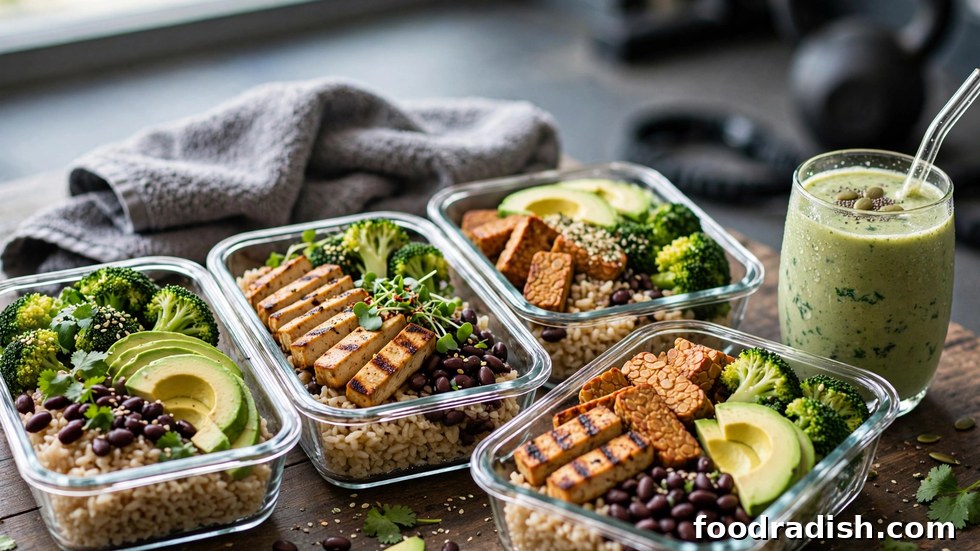
Building muscle as a vegetarian is entirely realistic — but it demands one thing above all: consistency with protein. To grow new muscle tissue, most lifters need roughly 1.6 to 2.2 grams of protein per kilogram of body weight per day, spread across four to five meals. Hitting that target daily, while training hard and eating in a small calorie surplus, is where most people slip up.
This meal prep guide removes the daily guesswork. You will learn a weekly system built around high-protein vegetarian staples — tempeh, tofu, soy chunks, lentils, paneer, Greek yogurt, and eggs — that delivers 140 to 170 grams of protein per day. Follow the prep schedule, and a full week of muscle-building meals takes about two to three hours on the weekend.
Why Meal Prep Matters for Muscle Gain
Muscle growth responds to two inputs: progressive resistance training and adequate nutrition, repeated for months. Missing protein on rest days or after workouts quietly caps your results. Research on meal frequency shows that spreading protein into 3 to 5 servings of 25 to 40 grams each stimulates muscle protein synthesis more effectively than one or two giant protein meals.
Prepping solves the two biggest obstacles: time and decision fatigue. When high-protein meals are already cooked and portioned, you will actually eat them. A lifter weighing 70 kg needs about 112 to 154 grams of protein daily; this guide’s template targets around 150 grams, which covers most trainees.
The Core Prep System
Build every prep session around four batch-cooked components: a protein main, a protein-supporting legume or grain, a carbohydrate base, and roasted vegetables. Mix and match these through the week so meals feel different even though the cooking happened once.
| Component | Prep Example (per week) | Protein Contribution |
|---|---|---|
| Protein main | Marinated tempeh (400g) + paneer cubes (300g) | ~19g/100g tempeh; ~18g/100g paneer |
| Legume/grain | Red lentils (500g dry) + quinoa (400g dry) | ~9g/100g cooked lentils; ~4.4g/100g cooked quinoa |
| Carb base | Brown rice (500g dry) + oats for breakfasts | Supports the calorie surplus |
| Vegetables | Two trays of broccoli, peppers, carrots, zucchini | Fiber, vitamins, and volume |
| Ready snacks | Boiled eggs, Greek yogurt tubs, roasted peanuts | ~6g per egg; ~10g/100g yogurt |
Your Weekly Prep Schedule
Sunday: The Big Cook (2–3 hours)
Start grains and legumes first since they cook unattended. While the lentils, quinoa, and rice simmer, marinate the tempeh in soy sauce, garlic, and smoked paprika, then bake it alongside two trays of chopped vegetables. Pan-sear the paneer cubes last. Boil a dozen eggs for grab-and-go snacks. Portion everything into containers: aim for five lunch/dinner boxes each containing a protein main, a legume or grain, a carb base, and vegetables.
Wednesday: The Refresh (30–40 minutes)
Midweek, cook a fresh protein — a tofu stir-fry or a soy chunk curry — plus one tray of vegetables. This keeps Thursday and Friday meals tasting fresh and prevents the food fatigue that makes people abandon prep by day five. Restock Greek yogurt and fruit if needed.
A Sample Muscle-Gain Day (150g Protein)
This is what a full day looks like using the prepped components plus quick-assembled breakfasts. Calories land around 2,600 to 2,900 depending on portion sizes — a modest surplus for most lifters.
- Breakfast (~35g protein): Oats cooked in soy milk with peanut butter, chia seeds, banana, and a side of Greek yogurt.
- Post-workout snack (~25g protein): Protein smoothie — soy milk, frozen berries, oats, and a scoop of plant protein powder (optional but convenient).
- Lunch (~35g protein): Prep box: baked tempeh, red lentils, brown rice, and roasted broccoli with tahini drizzle.
- Afternoon snack (~20g protein): Three boiled eggs and a handful of roasted peanuts.
- Dinner (~35g protein): Prep box: paneer and soy chunk curry with quinoa and roasted peppers.
| Meal | Calories (approx.) | Protein (g) |
|---|---|---|
| Breakfast | 650 | 35 |
| Post-workout smoothie | 400 | 25 |
| Lunch | 700 | 35 |
| Afternoon snack | 350 | 20 |
| Dinner | 700 | 35 |
| Daily total | ~2,800 | ~150 |
Best Protein Foods for Vegetarian Muscle Gain
When calories need to be high, prioritize protein sources that deliver maximum protein per bite without excessive volume — fiber-heavy foods are healthy but can make a surplus physically hard to eat.
- Tempeh (~19g/100g): The king of vegetarian muscle foods — dense, complete protein that crisps beautifully when baked.
- Paneer (~18g/100g): Excellent in curries; choose full-fat versions when bulking for easy calories.
- Soy chunks (~16g/100g cooked): The cheapest high-protein food on this list; simmer in curry for great texture.
- Greek yogurt (~10g/100g): Perfect between-meal protein with zero cooking.
- Eggs (~6g each): If you eat them, three to four eggs add 18 to 24 grams with complete amino acids.
- Lentils and chickpeas (~9g/100g cooked): Great supporting protein plus the carbs that fuel training.
Common Muscle-Gain Mistakes Vegetarians Make
- Eating too clean: Endless salads and steamed vegetables will not build mass. Add olive oil, nuts, peanut butter, and full-fat dairy to reach your surplus.
- Skipping post-workout protein: Have 25 to 40 grams of protein within a few hours of training — the prepped smoothie or a tempeh box works perfectly.
- Under-eating on rest days: Muscles grow between workouts, not during them. Keep protein high every single day.
- No variety: Eating identical lentils for 12 weeks straight leads to burnout. Rotate your protein mains weekly using the Sunday/Wednesday rhythm above.
Frequently Asked Questions
Do I need protein powder to build muscle as a vegetarian?
No, but it helps. Whole foods can reach 150 grams of protein, as this guide shows. A scoop of plant protein powder (20 to 25 grams) simply makes post-workout nutrition easier on busy days — treat it as a convenience, not a necessity.
How much should I eat above maintenance?
A surplus of 200 to 400 calories per day supports lean gains while limiting fat gain. Weigh yourself weekly; if you are gaining more than about 0.25 to 0.5 kg per week, trim portions slightly.
How long does prepped food stay safe?
Most cooked components keep three to four days refrigerated. That is exactly why the Wednesday refresh exists — nothing sits longer than four days, and Friday’s meals taste freshly made.
Key Takeaways
- Aim for 1.6–2.2 g of protein per kg of bodyweight daily, spread over 4–5 meals of 25–40g each.
- Batch-cook a protein main, legume/grain, carb base, and vegetables on Sunday, then refresh protein midweek.
- Tempeh, paneer, soy chunks, Greek yogurt, and eggs are the most efficient vegetarian muscle-building proteins.
- Eat in a modest 200–400 calorie surplus and keep protein high on rest days too — that is when muscles grow.
Start this Sunday: shop for the core components, block out two hours, and prep your first five boxes. Pair this system with progressive strength training three to five times per week, and check out our guide on How to Get 100g of Protein a Day as a Vegetarian to see exactly how a full day of high-protein eating is structured.